
Definition
podcast description: Solo podcast tips are practical ways for a one-person show to keep publishing without burning out. They usually cover cadence math, batch recording, episode buffers, idea banks, templates, and cuts to promo or editing that do not kill the show promise.
In simple terms: Solo podcast tips are practical ways for a one-person show to keep publishing without burning out. They usually cover cadence math, batch recording, episode buffers, idea banks, templates, and cuts to promo or editing that do not kill the show promise.
Quick Answer
Time one full episode end to end. Divide that by hours you can give each week. That is your real cadence, often biweekly. Batch-record two to four episodes when possible. Stay two
Time one full episode end to end. Divide that by hours you can give each week. That is your real cadence, often biweekly. Batch-record two to four episodes when possible. Stay two to four episodes ahead. Keep an idea bank so planning never starts from zero. Template outreach, notes, and clips. Cut tasks that do not move listens.
MicNest turns clear show promises into searchable episode pages and a destination that matches your description. Start at https://app.micnest.ai/auth/signup.
Key Takeaways
- ➔ Cadence is math, not motivation.
- ➔ Batching pays the setup cost once.
- ➔ A buffer turns emergencies into non-events.
- ➔ Templates beat reinventing every Monday.
- ➔ Not every episode needs ten clips.
- ➔ Shrink format before you quit.
- ➔ Planned breaks beat silent disappearances.
- ➔ Systems beat gear upgrades for solo survival.
If you host, book, edit, write notes, cut clips, and post, you are not bad at podcasting. You are running a studio with one employee.
Most solo podcast tips online say “be consistent.” Helpful. Incomplete. The hosts who last redesign the workload: a cadence they can keep, batch days instead of weekly panic, a buffer for sick weeks, and a short list of tasks they refuse to do every episode.
Reddit threads from solo operators keep landing on the same fixes. Build the show around your life. Template the repeatable parts. Stop treating every episode like a mini movie premiere.
1. Do the Cadence Math First
Write two numbers:
- Hours one episode really takes (research + record + edit + notes + promo)
- Hours you will protect each week without resenting the show
If an episode costs 10 hours and you have 5, you publish every two weeks. Not weekly with guilt.
Listeners prefer a reliable biweekly show over a weekly show that dies at episode twelve. Pick the smallest cadence you can keep for a year. You can always speed up later.
This is the same honesty behind season planning: finishable beats impressive.
2. Batch the Heavy Work
Recording one episode a week means warming up, setting up, and finding “podcast mode” every time. Batching means you pay that cost once.
A workable solo pattern:
| Block | Do |
|---|---|
| Plan day | Outline next 3–4 episodes from the idea bank |
| Record block | 2–4 solos (or a guest day separate from solos) |
| Edit block | Same checklist across the batch |
| Publish prep | Titles, notes, schedule |
Cap recording days. Two sharp half-days beat one exhausted marathon where episode three sounds tired.
Leave one slot flexible for timely topics. Batching should create slack, not a cage.
3. Protect an Episode Buffer
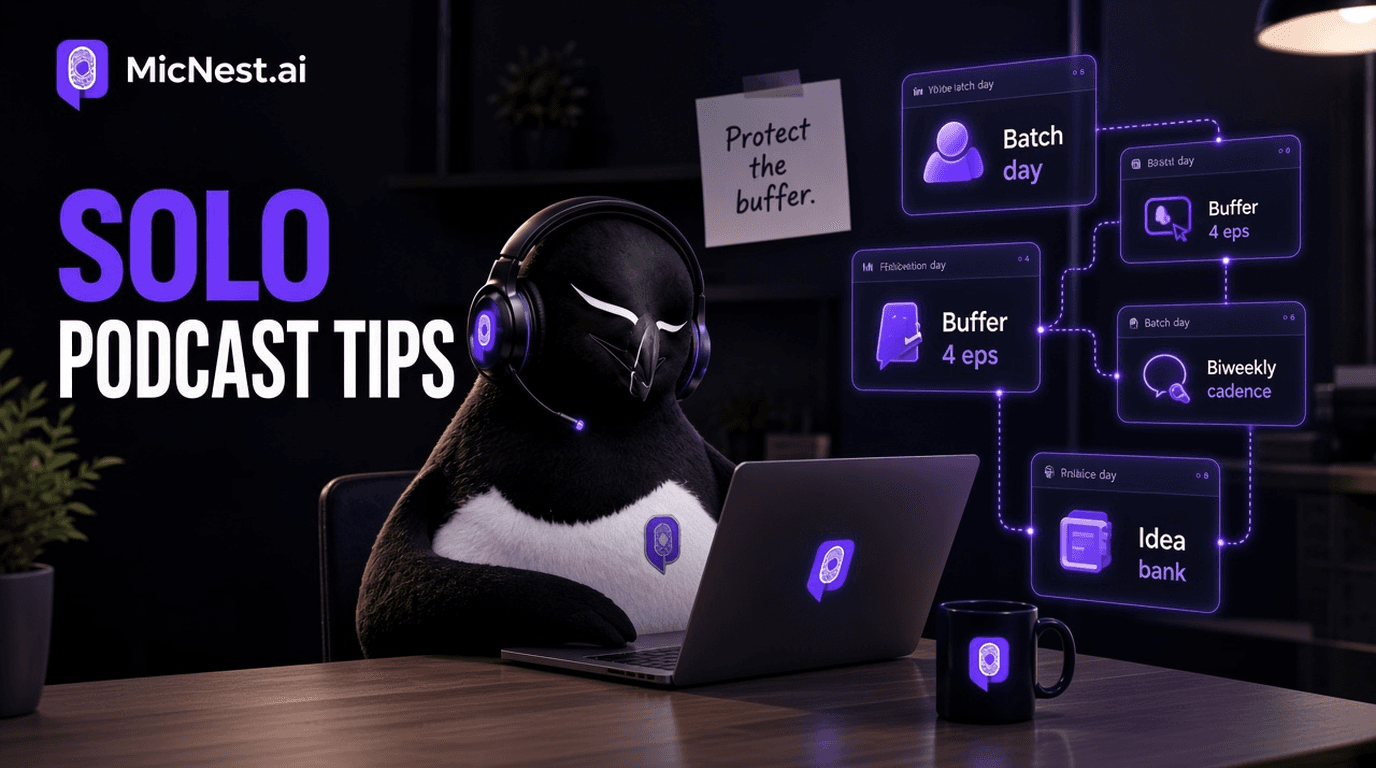
Aim to stay 2–4 finished episodes ahead of the publish date.
The buffer is for illness, travel, work spikes, and days you hate your own voice. Without it, every bad week becomes a missed week. Missed weeks train listeners to stop checking.
Hosts on Reddit call this the difference between a backlog dump and insurance. Keep the buffer. Publish on schedule. Refill when the cushion drops to two.
4. Keep an Idea Bank (Minimum 20)
Blank-page panic burns more energy than editing.
Capture ideas all week: listener questions, rants you can teach, guest follow-ups, “people also ask” style queries in your niche. When batch day comes, you pull. You do not invent.
Pair the bank with a one-sentence promise per episode. If two ideas say the same thing, merge them. If an idea needs three guests and a road trip, save it for a season when you have help.
5. Template Everything You Repeat
Solo shows die in admin.
Templates worth writing once:
- Guest outreach + follow-up
- Recording checklist (headphones, levels, backup)
- Edit pass list
- Show notes skeleton
- Clip + caption pattern
- Publish checklist
You already have cousins of this in publishing workflow and guest management. The solo version is stricter: if it is not templated, it competes with recording time.
6. Cut Before You Add Tools
Default cuts that save solo hosts:
- Fewer clips per episode (2 strong beats 10 weak)
- Shorter episodes if length is vanity
- Lighter edit (remove only what distracts)
- One promo channel done well instead of five half-done
- No new software until a real bottleneck hurts for two weeks
Gear rarely fixes a broken calendar. A clearer niche and a smaller format often do.
7. Plan Breaks Out Loud
Burnout shows up as dread before record day. That is data.
Options:
- Switch to biweekly for a quarter
- Run a short season, then pause with a return window
- Announce a break in the last few episodes and on your site
Silent disappearance costs more trust than a planned pause. Tell people where to binge while you are off.
8. A One-Page Solo Operating System
Copy this into a note:
- Cadence: _____ (weekly / biweekly / monthly)
- Episode time budget: _____ hours
- Batch day: _____ each month
- Buffer floor: never under 2 ready episodes
- Idea bank: 20+ live ideas
- Edit cap: _____ minutes, then export
- Promo minimum: 2 clips + 1 clear listen link
- Owned home: episode pages / site updated same week
If the page feels impossible, shrink cadence or format until it does not.
9. How MicNest Fits
Solo hosts need fewer tabs, not more hustle. When each episode leaves a page, notes, and a place people can return, promotion stays light and search can still work while you protect your buffer.
MicNest helps turn conversations into that owned layer so a one-person show does not depend on remembering every app listing by heart.
Frequently Asked Questions
What are the best solo podcast tips for beginners?
Time a real episode, set a cadence you can keep, batch when you can, and build a 2–4 episode buffer before you chase growth tactics.
Should solo podcasts publish weekly?
Only if the math works. Biweekly is a strong default for one-person shows with jobs and families.
How many episodes should I batch-record?
Often 2–4 per session. Stop when your energy drops. Tired audio is expensive to fix.
How do I avoid podcast burnout as a solo host?
Shrink cadence, batch heavy work, keep a buffer, template admin, and cut promo tasks that do not create listens.
Do I need a co-host to stay consistent?
No. You need a system. A co-host helps some people and adds scheduling cost for others.
Should I batch interviews and solos together?
Usually separately. Solos batch cleanly. Guests need their own booking and tech buffers.
What should I outsource first if I can pay for help?
Whatever blocks publish day most often: editing, clipping, or booking admin.
Can a solo show still grow?
Yes. Clear packaging, a keepable schedule, and findable episode pages beat a burned-out weekly grind.
Final Takeaway
Useful solo podcast tips are mostly operations with a human face.
Do the cadence math. Batch the hard parts. Protect a buffer. Keep ideas warm. Template the boring work. Cut what does not serve listeners.
A one-person show that still ships next month beats a perfectly staffed fantasy that never launches.
Related reading
Before vs after
Before
- - Lead with biography and adjectives
- - Stuff keywords at the bottom of the description
- - Reuse one vague blurb on every episode
After
- + Lead with audience and outcome in the first lines
- + Write specific episode descriptions with guest and topic
- + Keep description, name, and titles saying the same thing
Who is this for?
Hosts rewriting vague show bios
Creators whose feed copy does not match the show.
New shows before launch
Hosts writing the first show description and trailer package.
Episode publishers
Hosts who paste the same blurb under every episode.
Make the first lines earn the play
Write a show and episode description strangers can skim in seconds, then keep titles and pages aligned with the same promise.
Explore MicNest or start freeFrequently Asked Questions
What are the best solo podcast tips for beginners? +
Time a real episode, set a cadence you can keep, batch when you can, and build a 2 to 4 episode buffer before you chase growth tactics.
Should solo podcasts publish weekly? +
Only if the math works. Biweekly is a strong default for one-person shows with jobs and families.
How many episodes should I batch-record? +
Often 2 to 4 per session. Stop when your energy drops. Tired audio is expensive to fix.
How do I avoid podcast burnout as a solo host? +
Shrink cadence, batch heavy work, keep a buffer, template admin, and cut promo tasks that do not create listens.
Do I need a co-host to stay consistent? +
No. You need a system. A co-host helps some people and adds scheduling cost for others.
Should I batch interviews and solos together? +
Usually separately. Solos batch cleanly. Guests need their own booking and tech buffers.
What should I outsource first if I can pay for help? +
Whatever blocks publish day most often: editing, clipping, or booking admin.
Can a solo show still grow? +
Yes. Clear packaging, a keepable schedule, and findable episode pages beat a burned-out weekly grind.

