
Definition
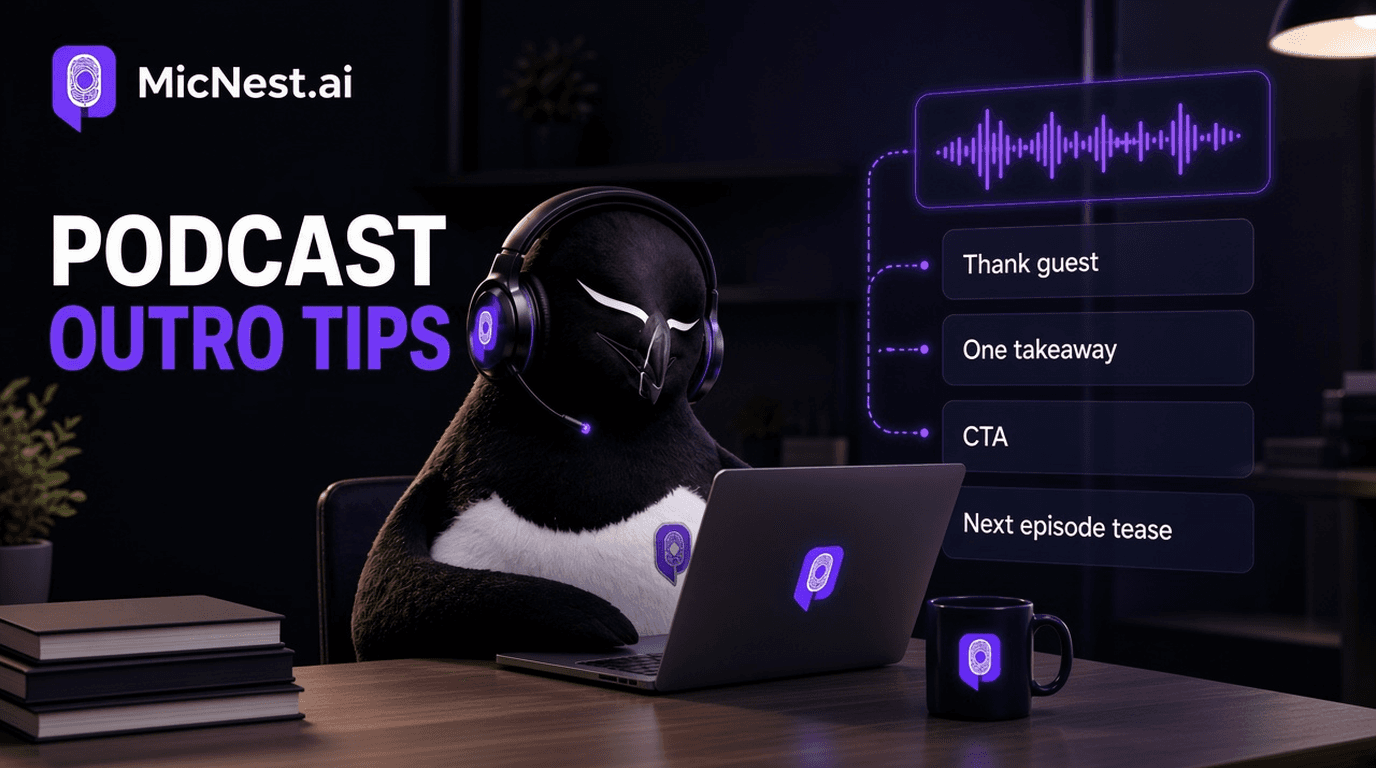
podcast description: Podcast outro tips are practical ways to end an episode so listeners leave with a clear takeaway and a single next action. A strong outro thanks contributors, restates value, gives one CTA, optionally teases the next episode, and exits before the ramble starts.
In simple terms: Podcast outro tips are practical ways to end an episode so listeners leave with a clear takeaway and a single next action. A strong outro thanks contributors, restates value, gives one CTA, optionally teases the next episode, and exits before the ramble starts.
Quick Answer
Keep it under about 30 to 45 seconds when you can. Thank the guest by name. Restate one takeaway. Give one CTA. Tease next week only if it is real. Soft music optional. Then end.
MicNest turns clear show promises into searchable episode pages and a destination that matches your description. Start at https://app.micnest.ai/auth/signup.
Key Takeaways
- ➔ Outros are for orientation, not a second monologue.
- ➔ One CTA beats five ignored asks.
- ➔ Name the takeaway so the episode sticks.
- ➔ Thank guests in a shareable way.
- ➔ Tease only what you will actually publish.
- ➔ Match length to episode energy; shorter is safer.
- ➔ Write the outro before you record the close.
- ➔ Point people to a real URL you control.
Hosts obsess over intros. Then the episode ends with thirty seconds of “uh, follow us everywhere, rate us five stars, visit our site, also our merch, also next week maybe, thanks bye” while listeners have already left.
These podcast outro tips keep the close short and useful: one takeaway, one clear next step, an optional tease, then stop. Same discipline as a good intro and trailer, just at the other end of the file.
1. What the Outro Is For
The last minute has three jobs:
- Help the listener remember what mattered
- Give one next action
- Leave a clean emotional exit
It is not for listing every platform, reading a newsletter paragraph, and previewing three future seasons. If they liked the episode, they will tolerate a short ask. They will not sit through a commercial for your entire brand stack.
2. A Simple Outro Structure
Use this spine every episode:
| Beat | Example |
|---|---|
| Thanks | “Thanks to Jordan for joining us.” |
| Takeaway | “The point: ship the buffer before you chase clips.” |
| CTA | “Grab the checklist at micnest.ai/blog/…” |
| Tease (optional) | “Next week: how we batch record in one afternoon.” |
| Sign-off | “I’m [Name]. See you next time.” |
Write it in the show notes doc before you hit record. Improvised outros become laundry lists.
3. Scripts You Can Steal
Solo teaching
> That’s the system: cadence math, batch day, buffer floor. If you want the one-page checklist, it’s linked in the show notes. I’m [Name]. Thanks for listening.
Interview
> Huge thanks to [Guest] for the candid breakdown of [topic]. My takeaway: [one sentence]. If this helped, share it with one person who books guests this week. Next episode: [tease]. See you then.
CTA to owned page
> Full notes and links are on the episode page at [short URL]. Start there, not on six apps. Thanks for listening.
Pick one script family and reuse it so the close becomes a habit for you and a pattern for them.
4. CTA Rules That Respect Listeners
- One primary ask. Subscribe *or* visit *or* share *or* join email. Not all four.
- Make it specific. “Leave a review” loses to “Share this with a host who keeps missing publish day.”
- Match the episode. A tooling episode can CTA a template. A story episode can CTA the next chapter.
- Say the URL slowly once. Or tell them “link in show notes” if the URL is ugly.
- Skip platform bingo. “Available everywhere” is enough if your description and site already list apps.
If growth is the goal, the outro should support the same system as getting more listeners: clarity plus a path, not noise.
5. Length, Music, and Credits
Length: Aim short. Long conversational shows can stretch to a minute if the takeaway is real. Most shows should land under 45 seconds.
Music: A short bed is fine. Do not let the theme eat the CTA. Fade under the last line, then out.
Credits: Name the guest, editor, or sponsor only if it helps the listener or the relationship. Dumping a full production roll every week trains skips.
Dynamic ads: Keep host-read outros separate from inserted mid-rolls so the human close stays clean.
6. Outro vs Trailer vs Intro
| Piece | Job |
|---|---|
| Trailer | Sell the show to strangers |
| Intro | Promise this episode fast |
| Outro | Land the point + next step |
Do not reuse your trailer script as an outro. Do not re-pitch the whole show after a great interview. Trust that the episode did the selling.
7. Common Outro Mistakes
Five CTAs. None get done.
No takeaway. The close feels empty.
Teasing episodes you have not planned. Breaks trust.
Reading every social handle. Nobody writes them down.
Apologizing for the episode. End with confidence or cut the apology in edit.
Hard cut with no sign-off. Feels broken; one clean goodbye is enough.
Different outro chaos every week. Patterns help listeners and make editing faster for solo hosts.
8. A 15-Minute Outro Upgrade
- Open last week’s episode. Time the outro.
- Delete every CTA except one.
- Add one sentence takeaway tied to the title.
- Thank the guest by name (if any).
- Add a real next-episode tease or remove the tease.
- Save as a template in your notes doc.
- Record the new close once; reuse the structure forever.
Ship the template on the next episode. Do not wait for perfect copy.
9. How MicNest Fits
A strong outro that says “see the notes on our episode page” only works if that page exists. Owned notes, chapters, and links make the CTA honest.
MicNest helps turn each conversation into a page worth mentioning at the end, so the close points somewhere durable instead of a vague “check our socials.”
Frequently Asked Questions
How long should a podcast outro be?
Usually 20–45 seconds. Longer only if you truly need credits or a careful summary.
Should every episode use the same outro?
Same structure, yes. Swap takeaway, guest thanks, CTA, and tease.
What is the best CTA for a podcast outro?
The one you can honor this week: episode page, email, share, or follow. One only.
Do I need outro music?
Optional. A short bed helps branding. Silence with a clean sign-off also works.
How do I end an interview podcast politely?
Thank the guest by name, state one takeaway, give one CTA, tease next time, stop.
Should I ask for reviews in the outro?
Sometimes. Rotate it. Permanent review-begging trains skips.
Can the outro include a sponsor?
Yes if it stays short and separate from the value close. Do not bury the takeaway under a read.
How is an outro different from a trailer?
Trailers recruit new listeners. Outros finish a specific episode and point to a next step.
Final Takeaway
Good podcast outro tips are mostly subtraction.
Thank people. Restate one point. Ask for one action. Tease only what is real. End.
Listeners remember how you made them feel at the close. Make it clean enough that they still want the next one.
Related reading
Before vs after
Before
- - Lead with biography and adjectives
- - Stuff keywords at the bottom of the description
- - Reuse one vague blurb on every episode
After
- + Lead with audience and outcome in the first lines
- + Write specific episode descriptions with guest and topic
- + Keep description, name, and titles saying the same thing
Who is this for?
Hosts rewriting vague show bios
Creators whose feed copy does not match the show.
New shows before launch
Hosts writing the first show description and trailer package.
Episode publishers
Hosts who paste the same blurb under every episode.
Make the first lines earn the play
Write a show and episode description strangers can skim in seconds, then keep titles and pages aligned with the same promise.
Explore MicNest or start freeFrequently Asked Questions
How long should a podcast outro be? +
Usually 20 to 45 seconds. Longer only if you truly need credits or a careful summary.
Should every episode use the same outro? +
Same structure, yes. Swap takeaway, guest thanks, CTA, and tease.
What is the best CTA for a podcast outro? +
The one you can honor this week: episode page, email, share, or follow. One only.
Do I need outro music? +
Optional. A short bed helps branding. Silence with a clean sign-off also works.
How do I end an interview podcast politely? +
Thank the guest by name, state one takeaway, give one CTA, tease next time, stop.
Should I ask for reviews in the outro? +
Sometimes. Rotate it. Permanent review-begging trains skips.
Can the outro include a sponsor? +
Yes if it stays short and separate from the value close. Do not bury the takeaway under a read.
How is an outro different from a trailer? +
Trailers recruit new listeners. Outros finish a specific episode and point to a next step.


